SpaceX’s Cooling Rally: When Hype Meets Gravity
Keywords: SpaceX, stock decline, Elon Musk, IPO, market sentiment, valuation, AI partnership, debt issuance, investor psychology
Introduction
For a stock that had barely stepped onto the public stage, SpaceX’s early run was nothing short of dramatic. The company surged out of its blockbuster IPO with the kind of momentum that makes traders forget what sleep feels like. For a moment, the market seemed to believe the story was simple: Elon Musk had once again built a company that could rewrite the rules.
But markets rarely stay simple for long.
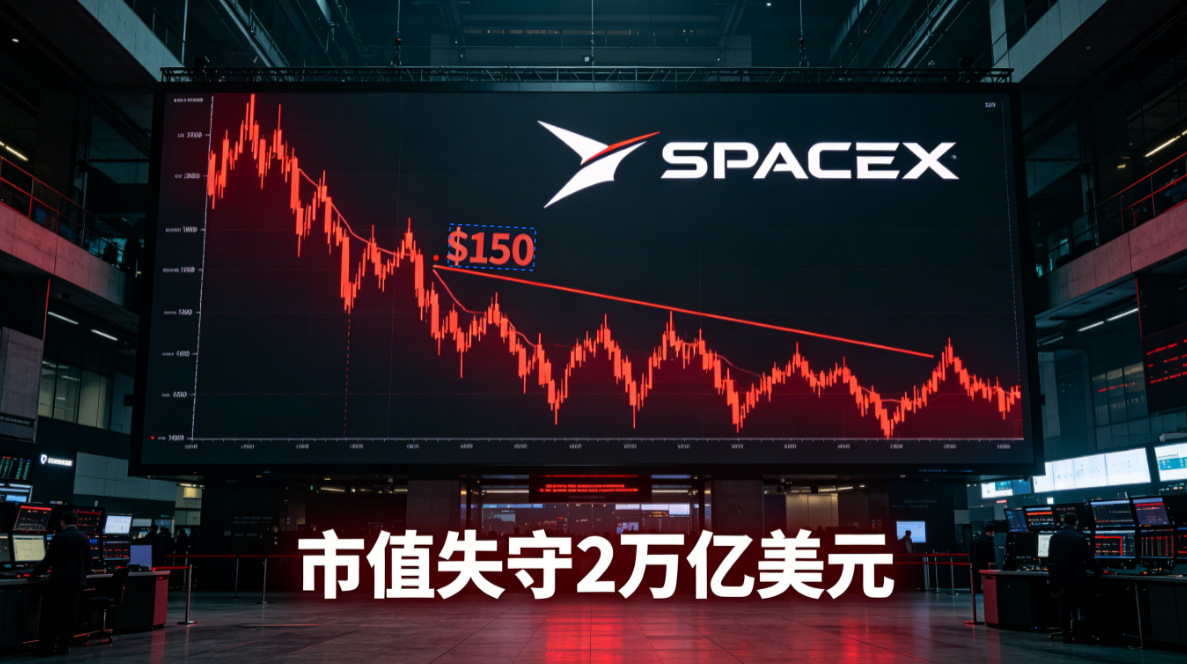
By Tuesday, SpaceX shares were falling for a fourth straight trading day, slipping below $150 and dragging the company’s market value under the $2 trillion mark. That is a brutal reset for a stock that had only recently been celebrated as one of the most exciting listings in history. After a 16% drop on Monday alone, the mood around the company shifted from euphoric to uneasy in just a few sessions.
So what happened? And more importantly, what does this tell us about the way investors treat big-name growth stories when the initial excitement fades?
From IPO Darling to Reality Check
SpaceX’s IPO on June 12 was the kind of event Wall Street loves to exaggerate and fear at the same time. It was the largest public offering ever, and the stock came out swinging. In its early days, the share price climbed so quickly that SpaceX briefly overtook giants like Amazon and Microsoft in market value. That was the sort of headline that could make even seasoned investors sit up and ask: is this the next great tech empire, or are we watching a very expensive first act?
The answer, at least for now, looks a little closer to the second option.
The stock’s rise was driven by a powerful mix of optimism, scarcity, and brand magnetism. SpaceX is not just another company. It sits at the intersection of aerospace, artificial intelligence, internet infrastructure, and, perhaps most importantly, Elon Musk’s reputation for turning seemingly impossible ideas into market-moving businesses. That combination creates a kind of investor gravity all its own.
But gravity works both ways.
Once the honeymoon ended, the market started doing what it always does: checking the numbers, not just the narrative. The first signs of weakness appeared with two consecutive declines of 3.6% and 5%. Then Monday hit, and the stock plunged 16%. By Tuesday, the slide had continued, and the original IPO excitement was quickly turning into a test of how much confidence investors really had in the company’s long-term valuation.
Why the Mood Changed So Fast
A sharp post-IPO reversal is not unusual, but SpaceX’s case is especially interesting because the company had been priced into perfection almost from day one. When the market gets carried away, even a minor disappointment can trigger a much bigger correction.
There are a few reasons the mood cooled so suddenly.
1. The valuation got ahead of the fundamentals
When a company debuts with a massive valuation, investors are implicitly betting on years of near-flawless execution. That is a very high bar. In SpaceX’s case, the early surge may have reflected enthusiasm for the vision more than a sober assessment of near-term earnings power.
That does not mean the company is weak. Far from it. But even great companies can become bad trades if the entry price is too high. Investors who bought into the IPO were hoping for continued momentum; instead, they got a reminder that markets tend to punish anything that looks overextended.
2. The stock became a momentum trade
In the first few sessions after a hot IPO, a stock often behaves less like a business and more like a popularity contest. Traders pile in, chasing the next breakout. Once the upward pressure stops, those same traders can exit just as quickly.
That appears to have happened here. The early surge attracted a wave of short-term money looking for fast gains. But when the stock started to wobble, that same money rushed for the door. The result was a self-reinforcing drop, where each decline made the next one more likely.
3. Expectations around Musk are always extreme
Elon Musk’s companies often come with a built-in premium because investors assume he will keep finding ways to expand the business. Sometimes that premium is justified. Sometimes it becomes too much of a good thing.
SpaceX is now being asked to live up to all of it at once: launch dominance, AI infrastructure, strategic partnerships, and eventually, perhaps, a broader role in next-generation computing and communications. That is an enormous amount of ambition to price into a stock before the market has had time to digest the fundamentals.
The Debt Move: Smart or Defensive?
On Monday, SpaceX also announced plans to issue senior unsecured bonds. At first glance, that may seem like a separate story. In reality, it matters a lot.
The company also disclosed that as of June 19, it held $100.8 billion in cash and cash equivalents. That is an enormous war chest by any standard. So why go to the debt market at all?
The answer is probably strategic flexibility.
For a company like SpaceX, capital is not just a cushion. It is fuel for future expansion. Between launch systems, AI infrastructure, satellite networks, and the general cost of innovation, keeping access to multiple funding channels is a smart move. Debt can be cheaper than equity in the right environment, and using bonds instead of diluting shareholders can be attractive when management believes the company’s long-term prospects are strong.
Still, markets can read debt issuance in two very different ways. Supporters see it as disciplined capital management. Skeptics see it as a sign that even a cash-rich company wants extra firepower because the next phase of growth will be expensive.
In a way, both views can be true.
What matters is not the existence of debt, but the confidence behind it. A company with nearly $101 billion in cash does not issue bonds because it is desperate. It does so because it wants optionality. But in a skittish market, even smart financing moves can get interpreted as cautionary signals.
The Reflection Deal Adds Another Layer
On the same day, SpaceX announced a major computing partnership with Reflection, an open-source AI startup. Under the agreement, SpaceX will provide access to its “Colossus” supercomputing infrastructure.
This is a very Musk-like move. It blends hardware, software, ambition, and ecosystem thinking into one announcement. To supporters, it shows that SpaceX is not just a rocket company or a satellite company. It is becoming a broader platform for AI and advanced compute. That’s the kind of narrative investors love because it expands the total addressable market and makes the company feel bigger than any single product line.
But deals like this can also raise questions.
Is SpaceX building a durable advantage, or is it simply broadening the story before the market fully understands the core business? Are these partnerships creating real value, or are they helping to justify a lofty valuation while the stock is still young?
The market’s answer so far is cautious. Big strategic announcements may help the long-term thesis, but they do not automatically stop a selloff. In fact, during a correction, they can sometimes remind investors how many moving parts are being priced into the stock all at once.
What This Says About the Market Right Now
SpaceX’s stumble is not just about one company. It is a snapshot of a broader market habit: falling in love with a story, then punishing it the moment the price looks too enthusiastic.
This cycle shows up again and again. A company goes public. The narrative catches fire. Investors convince themselves that the future is arriving faster than expected. Then reality arrives with a clipboard and a calculator.
That does not mean the company is in trouble. It means the market is becoming more selective.
For ordinary investors, the lesson is pretty straightforward: great businesses and great investments are not always the same thing. A world-changing company can still be a shaky trade if the entry price already assumes perfection. And once IPO excitement fades, the stock often needs something more concrete than ambition to keep climbing.
For long-term holders, the bigger question is whether the current pullback is a healthy reset or the start of a deeper repricing. That will depend on execution, capital deployment, and whether SpaceX can turn its enormous ambitions into earnings, not just headlines.
Conclusion
SpaceX’s recent decline is a classic case of market enthusiasm running ahead of itself. The company still has enormous strategic appeal, a massive cash position, and a founder whose track record has repeatedly altered what investors think is possible. None of that has changed.
What has changed is the temperature.
After a blistering IPO debut, the stock is now being forced to stand on its own two feet. The excitement has faded, the valuation has been questioned, and the market is no longer giving SpaceX a free pass just because the story is exciting. That may feel harsh, but it is also healthy.
In the long run, companies survive on execution, not applause. SpaceX has plenty of runway left, but this first post-IPO correction is a reminder that even the most celebrated names can lose altitude fast when expectations get too far ahead of reality.